Fifth-grade students at Nichols School are taking their learning beyond the page by producing their own podcast episodes about Westward Expansion. This innovative project grew out of Module 4 of the HMH Into Reading curriculum, connecting texts about the "Wild West" to state social studies standards on migration and settlement. As Mr. Peter Carlson, Fifth Grade Teacher at Nichols School, explained, the project began when they asked, "what else can we do besides just read about Westward Expansion?"
During the instructional phase, students learned what it took to survive the cross-country journey by playing the classic online game, The Oregon Trail Surprisingly, the students thoroughly enjoyed this "basic, vintage game.” Mr. Carlson noted, "I thought they would have hated that game since it's not quite as fancy as Fortnite and Roblox.”
To prepare for their podcasts, students were given a rubric and task list, requiring them to formulate questions and write out scripts based on their research. The process provided valuable learning moments; Mr. Carlson observed that there was "some productive struggle" as well as challenges among group members in sharing the workload equitably
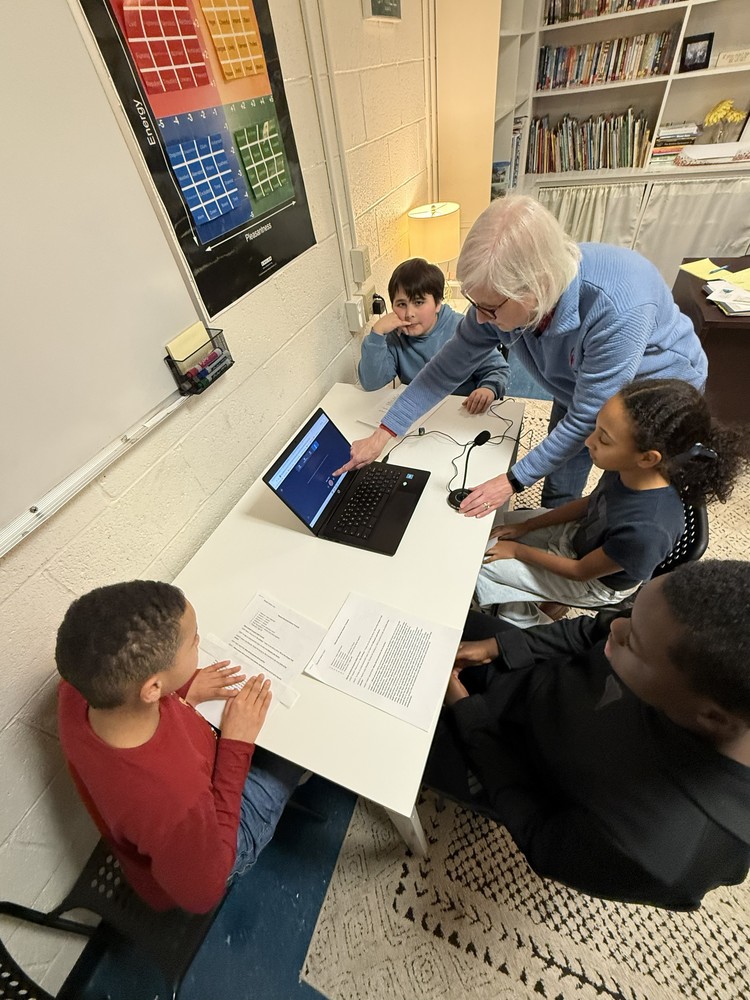
The project was a collaborative teaching effort. While Mr. Carlson focused on instructing the students on the Western Movement and guiding their research, Mrs. Rebecca Anderson managed the technology integration and the actual recording process. To record the podcasts, students utilized Google Vids. According to Mrs. Anderson, this platform was chosen because it is an already-approved part of the Google Education suite and "operates similar to other Google products the students are familiar with so the learning curve would be shorter."
Throughout the project, students demonstrated impressive digital literacy skills. Mrs. Anderson was especially impressed by how well students gathered information from both print and digital resources, "verifying what they found in one source and seeing it in another.” When asked to describe the energy in the room during the recording sessions in just three words, Mrs. Anderson replied, "excited to share."
This enthusiasm has clearly left a lasting impact on the classroom. Mr. Carlson shared that students "are eager to create another podcast but we haven’t decided on topics yet.” Educators at Nichols School see tremendous potential in this instructional model, with Mrs. Anderson pointing out that there are "endless possibilities of topics students could create podcasts about" and that this method could be successfully implemented for students in grades 4 through 12.